
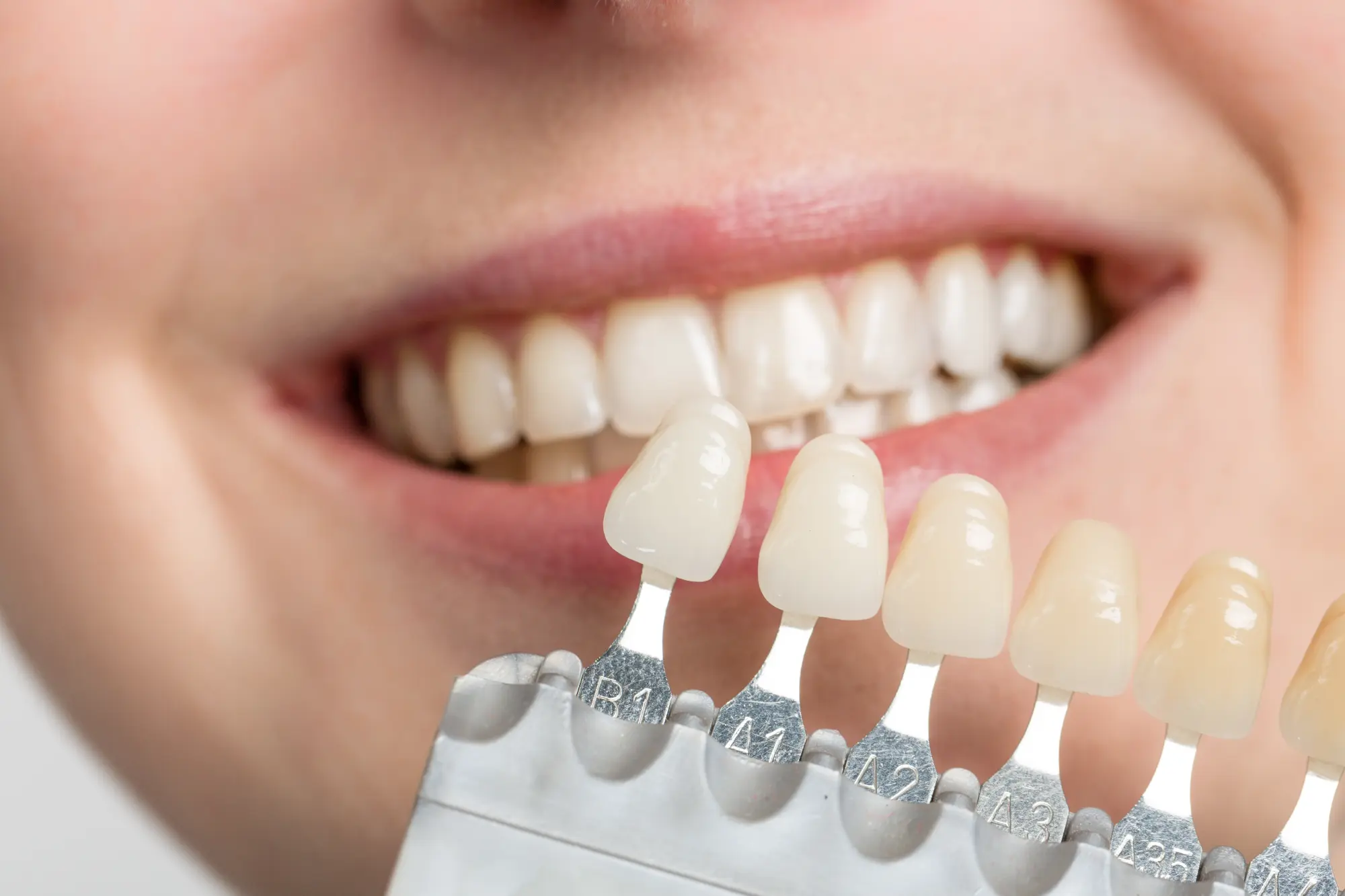
Natural-Looking Smile Enhancement with Functional Stability
Porcelain veneers are a precise method of enhancing the appearance of teeth while preserving structural integrity.
When planned correctly, veneers improve colour, shape, proportion, and symmetry without compromising bite function or long-term durability.
Dr Hafsa Al Idrissi provides porcelain veneers in Dubai with a prosthodontic foundation, ensuring aesthetic refinement is supported by occlusal stability and structural planning.
What Are Porcelain Veneers?
Porcelain veneers are thin ceramic shells bonded to the front surface of teeth to improve:
- Discolouration
- Uneven shape
- Minor spacing
- Chipped edges
- Worn surfaces
- Mild misalignment
They are custom-designed for each individual.
When Are Veneers Appropriate?
Veneers may be suitable if you have:
- Stubborn staining not responsive to whitening
- Slightly uneven or irregular teeth
- Small gaps between teeth
- Minor edge fractures
- Shortened or worn teeth
- Asymmetry in the smile
They are not always appropriate for severely misaligned or structurally unstable teeth.
The Functional Approach to Veneers
Veneers must respect:
- Bite harmony
- Jaw movement
- Occlusal contact patterns
- Muscle balance
- Existing restorations
Improperly designed veneers may chip or fail prematurely.
Functional planning protects longevity.
The Veneer Consultation Process
Step 1 – Comprehensive Evaluation
Assessment includes bite analysis, occlusion, and jaw stability.
Step 2 – Smile Design Planning
Digital photographs and mock-ups help visualise outcomes.
Step 3 – Conservative Preparation
Minimal tooth preparation where indicated.
Step 4 – Provisional Phase
Temporary restorations may be used to test comfort and aesthetics.
Step 5 – Final Bonding
Custom laboratory-fabricated porcelain veneers are bonded precisely.
Types of Veneers
Minimal-Prep Veneers
Used when enamel thickness and alignment permit.
Conventional Veneers
Require slight enamel reshaping for optimal contour.
Material selection depends on structural requirements and aesthetic goals.
Veneers & Bruxism
Patients who grind or clench require careful evaluation.
Bruxism may:
- Increase risk of ceramic fracture
- Shorten veneer lifespan
- Overload edges
Protective splint therapy may be recommended.
Veneers vs Crowns
Veneers cover the front surface only.
Crowns encase the entire tooth.
Crowns may be required when:
- Teeth are heavily restored
- Structural damage is extensive
- Fracture risk is high
Diagnosis determines appropriate treatment.
How Long Do Veneers Last?
With proper design and maintenance, veneers are designed for long-term durability.
Longevity depends on:
- Bite stability
- Oral hygiene
- Clenching patterns
- Regular follow-up
Your feel-good journey starts now
Request Porcelain Veneers Consultation in Dubai
If you are considering veneers to enhance your smile, a structured evaluation can determine whether porcelain veneers are appropriate while preserving functional stability.
Frequently Asked Questions
Are veneers painful?
The procedure is minimally invasive and carefully managed.
Do veneers look natural?
The procedure is minimally invasive and carefully managed.
When properly designed, they mimic natural translucency and proportion.
Can veneers damage my teeth?
Conservative preparation preserves enamel wherever possible.
Will veneers stain?
Porcelain is highly stain-resistant.