TMJ Treatment in DubaiJaw pain is easy to dismiss as stress, teeth grinding or simply getting older. But persistent jaw pain, clicking, stiffness, headaches or difficulty opening your mouth may be signs of a temporomandibular disorder (TMD).The temporomandibular joints (TMJs) connect your lower jaw to your skull and work with the surrounding muscles, ligaments and …


TMJ Treatment in Dubai
Jaw pain is easy to dismiss as stress, teeth grinding or simply getting older. But persistent jaw pain, clicking, stiffness, headaches or difficulty opening your mouth may be signs of a temporomandibular disorder (TMD).
The temporomandibular joints (TMJs) connect your lower jaw to your skull and work with the surrounding muscles, ligaments and discs every time you chew, speak or open your mouth. Problems affecting these structures can cause jaw joint pain, muscle pain, facial discomfort, headaches and restricted jaw movement.
If you are experiencing ongoing symptoms, the right approach is not simply to treat the pain. A proper assessment can help determine what is contributing to your symptoms and whether you need conservative care, an oral appliance, physical therapy, specialist management or referral to another healthcare professional.
If you are looking for TMJ treatment in Dubai, understanding when jaw pain needs specialist attention is an important first step.
What Is TMJ Disorder?
The term TMJ refers to the temporomandibular joint, while TMD (temporomandibular disorder) describes a group of conditions affecting the jaw joints, chewing muscles and associated structures.
TMD can present differently from one person to another. Common symptoms include:
- Pain around the jaw joint
- Jaw muscle tenderness or tightness
- Pain when chewing
- Clicking, popping or grinding sounds
- Difficulty opening the mouth fully
- Jaw stiffness
- Jaw locking
- Facial pain
- Pain that spreads toward the neck or face
- Headaches associated with jaw symptoms
- Changes in how the upper and lower teeth meet
However, not every jaw click means you have a TMJ disorder. Clicking or popping without pain is common and may not require treatment. Persistent pain, restricted movement or functional problems deserve a proper assessment.
Why Does My Jaw Hurt?
There is no single cause of TMJ pain.
TMD can involve the jaw joint, chewing muscles or both. Contributing factors can include teeth clenching, bruxism (teeth grinding), injury, arthritis and other musculoskeletal or pain-related factors. Current clinical guidance also recognizes that TMD is multifactorial rather than being caused by one structural factor in every patient.
This is why simply assuming that an uneven bite is the cause of every case of jaw pain can be misleading.
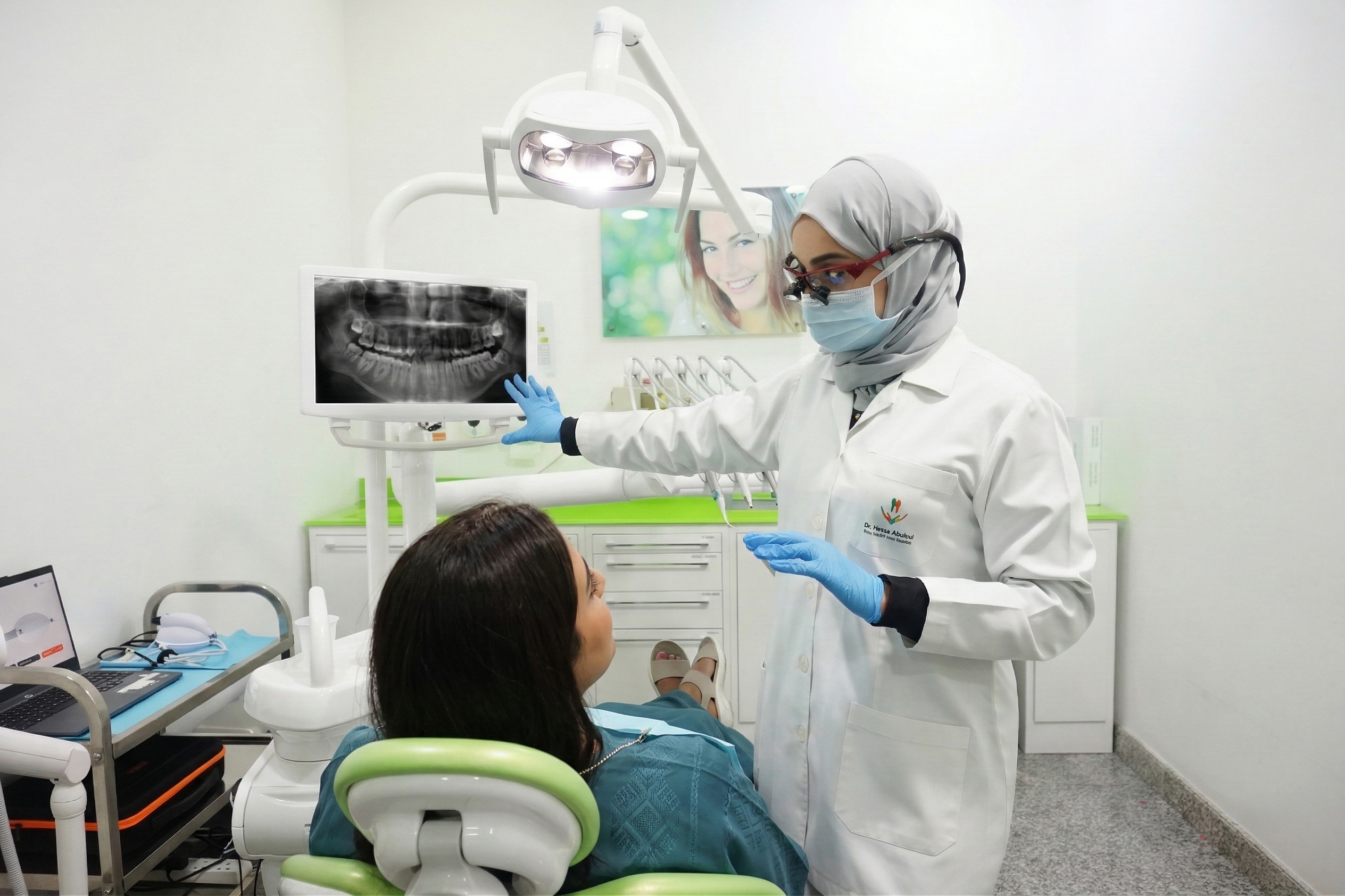
A specialist assessment should look at your symptoms, jaw movement, muscles, joints and relevant dental history before recommending treatment.
7 Signs You Should Consider Seeing a TMJ Specialist in Dubai
1. Your jaw pain keeps coming back
Occasional discomfort may settle with simple self-care. Persistent or recurring pain deserves professional assessment, particularly if it is interfering with eating, speaking or everyday activities.
2. Your jaw clicks and hurts
A painless click is not necessarily a problem. However, painful clicking, popping or grinding combined with restricted movement can be associated with TMD and should be evaluated.
3. You have difficulty opening your mouth
Limited jaw movement or progressive difficulty opening the mouth can be a reason to seek specialist assessment. Dubai Health Authority guidance specifically identifies limitation or progressive difficulty in mouth opening among situations requiring specialist consideration.
4. You regularly clench or grind your teeth
Bruxism can place additional strain on the chewing muscles and jaw system and may contribute to tooth wear, muscle discomfort and jaw symptoms.
If you frequently wake up with a tight jaw, sore facial muscles or headaches, tell your dentist or TMJ specialist.
5. You experience jaw pain together with headaches
Jaw-related pain can extend beyond the joint itself. TMD symptoms may include pain involving the face or neck and can occur alongside headaches.
That does not mean every headache is caused by TMJ. A proper assessment is important because headaches and facial pain can have many causes.
6. Your jaw locks
A jaw that locks open or closed, particularly when accompanied by pain or reduced movement, should not be ignored.
7. Previous treatment has not helped
If you have already tried a generic night guard or other treatment without improvement, the next step should not automatically be a stronger or more invasive treatment.
A detailed reassessment may be more appropriate.
How Is TMJ Disorder Diagnosed?
There is no single universally accepted test that diagnoses every TMD case.
A dental or specialist assessment may include:
Discussion of your symptoms and pain pattern
Medical and dental history
Examination of jaw movement
Assessment of the jaw joints
Examination of the chewing muscles
Evaluation of tenderness or muscle tightness
Assessment of jaw function
Review of teeth grinding or clenching habits
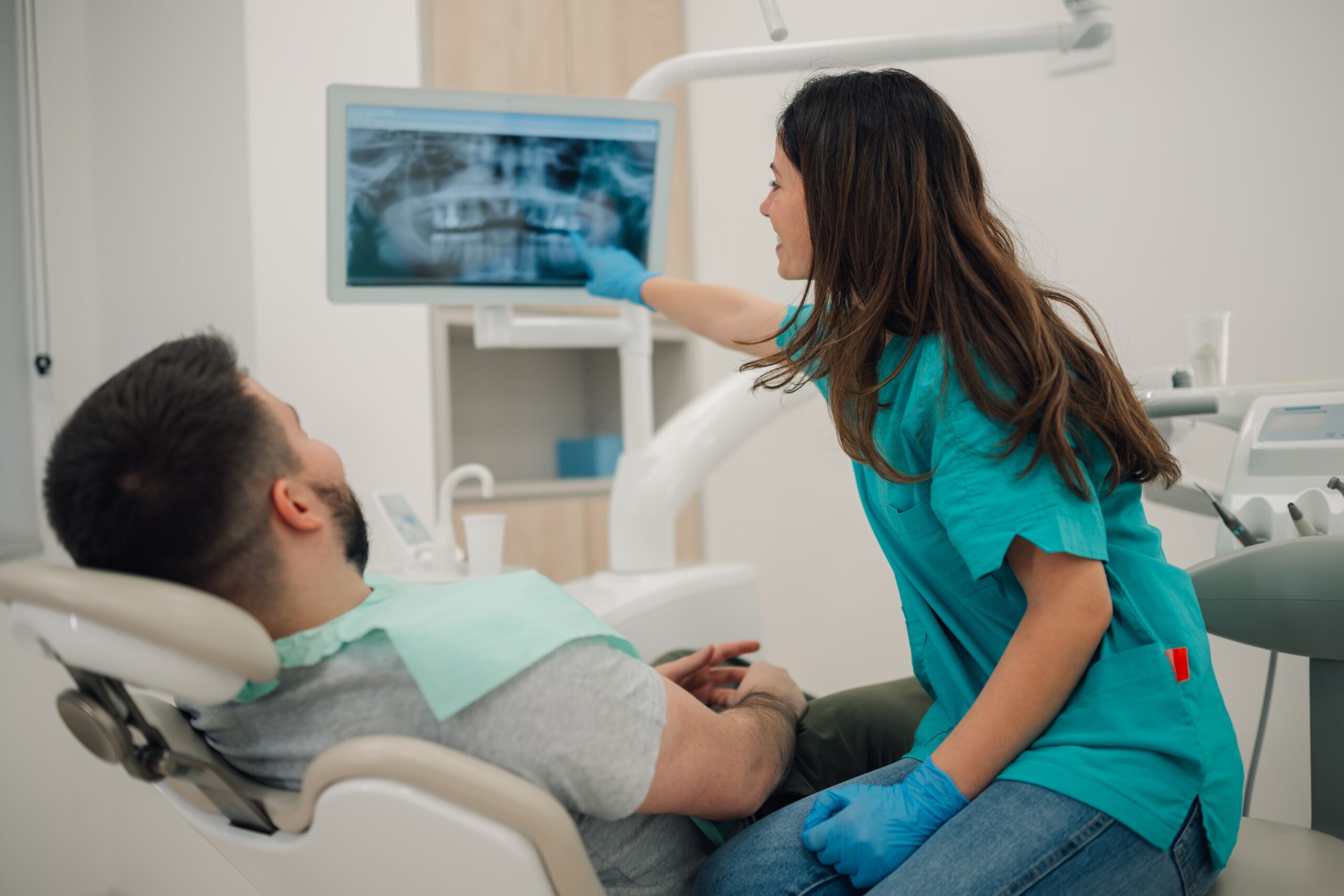
Imaging when clinically appropriate
Depending on the suspected problem, imaging such as X-rays, CT or MRI may be considered.
The purpose of diagnosis is not simply to give the pain a name. It is to understand what may be contributing to your symptoms and select an appropriate treatment strategy.
What Does TMJ Treatment in Dubai Involve?
TMJ treatment should be individualized. There is no single treatment that is appropriate for every patient.
For many people, initial management focuses on conservative and reversible approaches.
Depending on the diagnosis, treatment may include:
Conservative TMJ Care
Simple measures can include modifying habits that aggravate symptoms, avoiding excessive chewing or gum chewing, using heat or cold when appropriate, and following prescribed jaw exercises.
Occlusal Splint Therapy
An occlusal splint is an intraoral appliance designed for specific clinical situations.
Dr. Hafsa Al Idrissi provides specialist occlusal splint therapy in Dubai, with custom fabrication, fitting, adjustment and follow-up rather than treating a splint as a one-size-fits-all night guard.
Importantly, an appliance should be recommended based on the individual’s symptoms and diagnosis. Current evidence-based guidance advises caution with appliances or procedures designed to permanently change the bite.
Management of Teeth Grinding and Clenching
If bruxism or jaw clenching is contributing to your symptoms, treatment may involve addressing the habit alongside appropriate dental or specialist care.
Simply protecting the teeth without considering the underlying factors may not address the complete problem.
Myofascial and Functional Management
When muscle-related pain contributes to symptoms, management may focus on the muscles involved in chewing and jaw function.
Dr. Hafsa’s Dubai practice provides jaw pain management, myofascial pain therapy, headache management related to TMD and neuromuscular bite therapy as part of its orofacial pain and TMD services.
Physical Therapy and Other Care
Depending on the diagnosis, physical therapy and other non-surgical approaches may be considered. TMD treatment can sometimes involve more than one healthcare professional.
Do You Need a Night Guard for TMJ?
Not necessarily.
A common mistake is assuming that anyone with jaw pain automatically needs a night guard.
An intraoral appliance may be appropriate for some patients, but the type, design and purpose matter. Current guidance recommends that patients understand why an appliance is being recommended and avoid appliances designed to permanently change the bite without a clear clinical indication.
If you already have a night guard but your jaw pain has continued or become worse, speak with a dental professional rather than continuing to use it without reassessment.
Can TMJ Cause Headaches?
TMJ disorders can be associated with headaches and pain affecting the face or neck. However, not every headache is caused by TMJ.
This distinction matters.
If you experience both headaches and jaw symptoms, a specialist can assess whether there is a relationship between the two or whether another condition may be contributing to your symptoms.
When Does Jaw Pain Need More Urgent Assessment?
You should seek professional assessment if you experience:
Progressive difficulty opening your mouth
Persistent inability to eat normally
Significant or persistent jaw pain
Recurrent jaw dislocation
Jaw symptoms that do not improve with conservative care
Significant changes in jaw function
Dubai Health Authority guidance recommends specialist referral for refractory TMJ dysfunction that has not responded to conservative or primary care measures, as well as certain cases involving restricted mouth opening, difficulty maintaining a normal diet and recurrent TMJ dislocation.
Why Specialist TMJ Assessment Matters
Jaw pain is not always a simple dental problem.
TMD can involve the jaw joints, muscles, teeth, nervous system and broader pain mechanisms, which is why treatment should begin with an appropriate assessment rather than automatically moving to irreversible dental procedures.
For patients in Dubai with persistent jaw pain, clicking, clenching, headaches or restricted jaw movement, a specialist evaluation can help clarify the problem and identify an appropriate treatment pathway.
At Dr. Hafsa Al Idrissi, TMJ and orofacial pain care includes assessment and management of conditions such as temporomandibular disorders, jaw pain, myofascial pain and TMD-related headaches, along with specialist occlusal splint therapy where clinically appropriate.
Frequently Asked Questions About TMJ Treatment in Dubai
What is the best treatment for TMJ disorder?
There is no single best treatment for every TMJ disorder. Treatment depends on the symptoms, diagnosis and contributing factors. Conservative and reversible approaches are generally considered before more invasive treatments.
How do I know if I need a TMJ specialist?
Consider an assessment if you have persistent jaw pain, painful clicking, restricted mouth opening, jaw locking, significant clenching or grinding, or symptoms that have not improved with initial care.
Can TMJ cause ear pain?
Jaw disorders can be associated with ear-related symptoms, although ear pain can have many other causes. Persistent ear symptoms should be properly evaluated rather than automatically attributed to TMJ.
Can teeth grinding cause jaw pain?
Yes. Teeth grinding and clenching can contribute to strain on the chewing muscles and jaw system and are commonly considered when evaluating jaw pain and TMD.
Is clicking in the jaw always serious?
No. Clicking or popping without pain is common and may not require treatment. Painful clicking, restricted movement or locking is more concerning and warrants assessment.
Can TMJ be treated without surgery?
Many TMD cases can be managed with conservative, non-surgical approaches. The appropriate treatment depends on the diagnosis and severity of symptoms.
How long does TMJ treatment take?
There is no standard treatment timeline. Some patients improve with conservative management, while others require structured follow-up and a combination of approaches. The treatment duration depends on the underlying condition and response to care.
Where can I get TMJ treatment in Dubai?
Patients looking for TMJ treatment in Dubai should look for a dental professional with appropriate experience in TMD and orofacial pain. Dr. Hafsa Al Idrissi provides TMJ and jaw pain management in Dubai Healthcare City.
Take the Next Step if Your Jaw Pain Is Persistent
Jaw pain should not automatically be dismissed as stress, grinding or a dental problem.
If you experience persistent jaw pain, painful clicking, jaw stiffness, headaches, teeth grinding or difficulty opening your mouth, a proper assessment can help identify the likely source of your symptoms and determine whether conservative TMJ treatment is appropriate.
For specialist TMJ treatment in Dubai, Dr. Hafsa Al Idrissi provides assessment and individualized management for TMD, jaw pain and related orofacial pain conditions.
Location: Building 52, Dubai Healthcare City, Dubai
Phone: +971 52 370 3503
Email: info@drhafsaalidrissi.com
This article is intended for general educational purposes and does not replace an individual clinical examination or medical advice.